Dynafiber
Dynafiber
Dynafiber
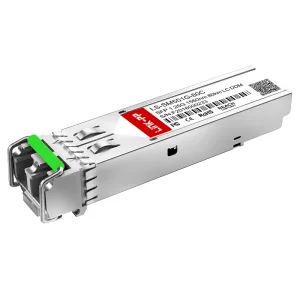
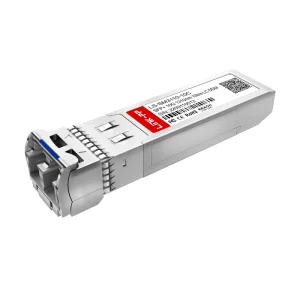
Explore our top-tier SFP, SFP28, QSFP28 modules and shielded connectors engineered for maximum throughput, compatibility, and latency-sensitive deployments.
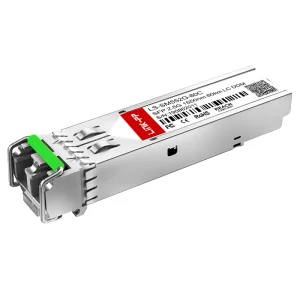
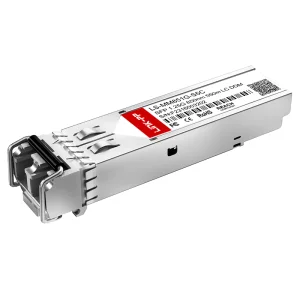
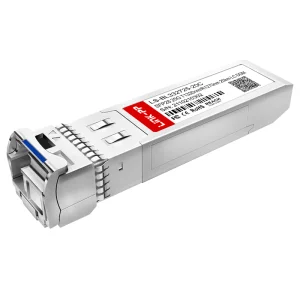
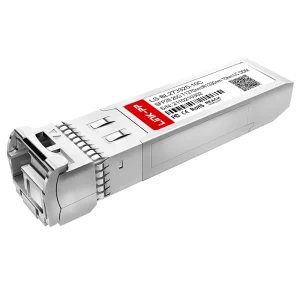
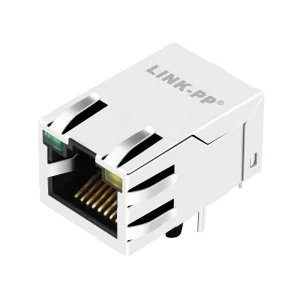
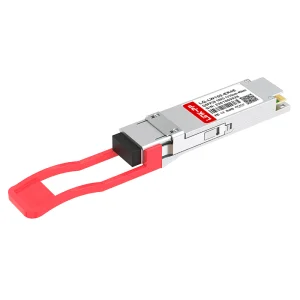
The global high-speed optical transceiver module market is undergoing unprecedented expansion, fueled by hyperscale cloud migrations, 5G densification, and the compute demands of Artificial Intelligence (AI) and Machine Learning (ML) clusters. Modern telecommunication ecosystems and hyperscale data centers require seamless, zero-latency interconnects to manage data transport over varying distances.
As the backbone of transmission networks, Small Form-factor Pluggable (SFP) modules represent the critical nodes in physical layers. From classical 1.25G SFP transceivers to next-generation 25G SFP28, 40G QSFP+, and 100G QSFP28 interfaces, hardware developers and operators must balance bandwidth requirements, thermal loads, and distance specs to maintain network integrity.
By implementing strict conformity with the Multi-Source Agreement (MSA) standards, leading manufacturers ensure that hot-pluggable optical engines deliver absolute mechanical and electrical compatibility across major hardware vendor platforms including Cisco, Juniper, Arista, and HPE.
How next-generation optical engines are transforming data rates, link efficiency, and transmission reaches.
Transitioning from NRZ modulation to PAM4 (Pulse Amplitude Modulation) allows doubling of data rates at the physical layer, paving the path to 100G, 400G, and 800G optical links without relying on multi-fiber arrays.
Integrating laser drivers and receiver photodiodes directly on silicon substrates reduces power consumption, minimizes parasitic electrical signals, and drives lower costs per gigabit.
Single Mode Bidirectional (BiDi) transceivers utilize different wavelengths (e.g., 1270nm-TX/1330nm-RX) over a single optical fiber core, reducing optical cable infrastructure costs by 50%.
In harsh operational environments such as roadside outdoor cabinets, remote cellular installations, and manufacturing plants, standard commercial transceivers risk hardware degradation. Advanced manufacturing processes emphasize Industrial Temp (-40°C to +85°C) SFP solutions with upgraded laser components and internal diagnostic parameters. These specialized modules prevent wavelength drift and maintain consistent optical signal-to-noise ratios (OSNR) under critical thermal fluctuations.
A world-class manufacturing facility and comprehensive optical engineering powerhouse dedicated to reliability, scalability, and E-E-A-T standards.
Established in 2016, Dynafiber Optical Technology Co., Ltd. specializes in the research, development, manufacturing, and global supply of high-performance optical transceiver modules and fiber optic communication solutions. With a modern production facility covering 28,600㎡, Dynafiber has developed strong capabilities in optical communication technologies, supporting customers worldwide with reliable, scalable, and customized networking products.
The company achieves an annual export revenue of approximately USD 18.6 million, with 7 years of export experience and 12 years of industry experience in optical communication manufacturing. Dynafiber serves global telecom operators, data center providers, system integrators, and enterprise networking companies with advanced optical solutions designed for high-speed connectivity.
Dynafiber maintains strict quality control systems throughout the entire manufacturing process. Quality inspection includes automated optical performance testing, temperature cycling tests, compatibility verification, aging tests, and reliability evaluation.
We implement advanced product inspection methods such as AOI inspection, BER testing, optical power measurement, wavelength analysis, and environmental stress testing. A professional quality control team of 65 engineers and inspectors ensures that every product meets international quality standards.
With extensive international trade experience, Dynafiber has built a strong global supply network and maintains cooperation with 1,200+ supply chain partners, including component manufacturers, optical device suppliers, and technology service providers. The company’s trade background covers OEM manufacturing, ODM cooperation, and global distribution partnerships.
Dynafiber's major markets include North America, Europe, Southeast Asia, the Middle East, and South America. Our main customer groups include telecommunications companies, cloud service providers, data center operators, network equipment distributors, and industrial communication solution providers.
The company has strong R&D capabilities supported by a professional engineering team of 260 R&D engineers focused on optical module design, signal integrity optimization, thermal management, and next-generation communication technologies. Dynafiber provides flexible customization options, including custom optical specifications, firmware configuration, labeling services, packaging solutions, and OEM/ODM manufacturing support.
In the past year, Dynafiber launched 180 new products, covering advanced optical transceiver categories such as SFP, SFP+, QSFP, QSFP28, QSFP-DD, DAC, AOC, and high-speed data center optical solutions. Through continuous innovation and investment in research, Dynafiber remains committed to delivering dependable optical communication products and building long-term partnerships with customers worldwide.





Adapting high-reliability optical layers to solve specific regional and infrastructure-level challenges.
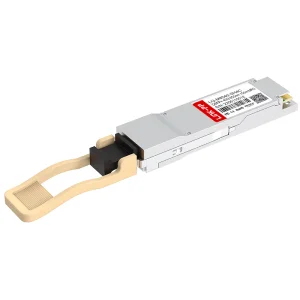
Optimizing leaf-spine switch layouts with high-density QSFP28 100G and 400G links. Our transceivers optimize fiber routing within cabinet setups to ensure optimal airflow and cooling while supporting massive parallel processing workloads.
Using SFP28 25G BiDi transceivers to double throughput capacity over existing single optical fibers in metropolitan layouts, preventing costly civil trenching work and speed deployments of new base stations.
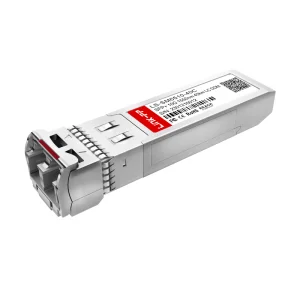
Bridging legacy fiber pathways to new core switch structures. Featuring 10GBASE-ER SFP+ and 1.25G SX/ZX optical modules to link campus structures with zero package loss over distances from 550m to 80km.
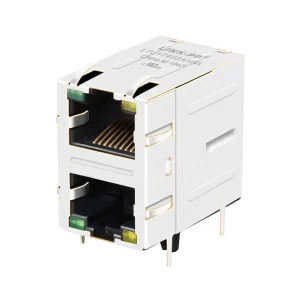
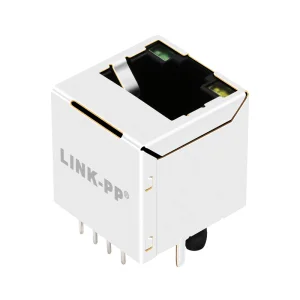
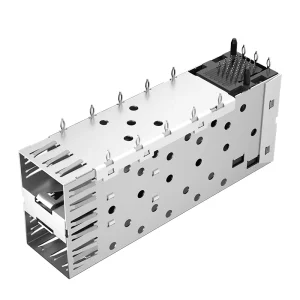
In smart factory layouts and IoT edge setups, electromagnetic interference (EMI) presents a significant challenge to signal reliability. The integration of EMI-shielded SFP cages and through-hole SMT connector designs provides robust shielding, protecting high-frequency circuits against external noise. This ensures continuous transmission integrity in automated environments.
A core aspect of reliable transceiver sourcing is adherence to standard mechanical and electrical frameworks. SFP Multi-Source Agreements (MSA) dictate specific parameter limits for optical engines, ensuring that different vendors can manufacture plug-in devices that operate without issues on standard host platforms.
Modern networks require predictive failure mitigation. SFP transceivers equipped with DOM capabilities monitor real-time metrics, including:
Our quality verification processes check all operating metrics. Key procedures include:
Answers to key engineering and purchasing questions about SFP modules and networking compatibility.
The Multi-Source Agreement (MSA) is an industry-wide agreement that defines the mechanical dimensions, electrical connector configurations, and optical performance specifications of transceivers. By following MSA guidelines, manufacturers ensure that their optical modules are physically compatible and electronically interoperable with any networking switch or host port designed to the same standard. However, host switch firmware may require vendor-specific code validation. Experienced manufacturers program custom EEPROM code configurations to ensure compatibility with proprietary host systems.
Single Mode Fiber (SMF) transceivers utilize a narrow light path (typically 9µm core diameter) using longer wavelengths (1310nm or 1550nm). This reduces signal dispersion, making them ideal for long-distance transmissions ranging from 10km to 80km+. Multimode Fiber (MMF) transceivers feature a wider core diameter (typically 50µm or 62.5µm) and use shorter wavelengths (usually 850nm). MMF is cost-effective for short distances, typically up to 550m, making it common in local area networks (LANs) and enterprise data centers.
As transmission frequencies increase, high-speed signals generate electromagnetic radiation that can interfere with adjacent channels and external circuits. EMI shielded cages (such as Molex-compatible versions) wrap around the module's electrical interface. They use conductive spring fingers and grounded grounding pins to direct stray energy to the chassis ground, preventing packet loss and protecting high-speed components.
Standard duplex transceivers require two separate optical fiber lines: one for transmitting data and another for receiving. BiDi modules utilize Wavelength Division Multiplexing (WDM) to transmit and receive signals at different wavelengths simultaneously over a single optical strand (e.g., 1270nm-TX and 1330nm-RX). This allows operators to double their network capacity without the high cost of laying new optical fiber infrastructure.
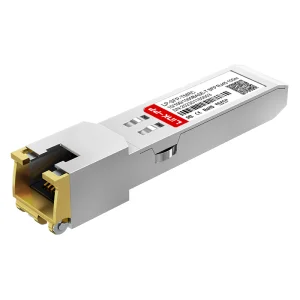
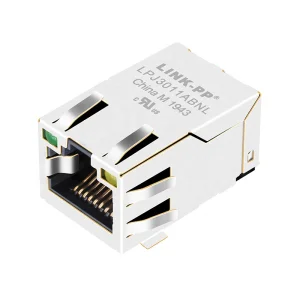
Complete your deployment with our range of high-density QSFP+ modules, copper converters, and interface connectors.